The short answer
Give each course a clear home, break large assignments into concrete steps, and bring only the next deadlines and study sessions into your daily plan.
A semester is easier to manage when course material, assignment details, and daily actions remain connected. BigPlan’s lists, subtasks, notes, labels, and timeline let you preserve that structure while still focusing on today.
Worked example
From syllabus to study plan
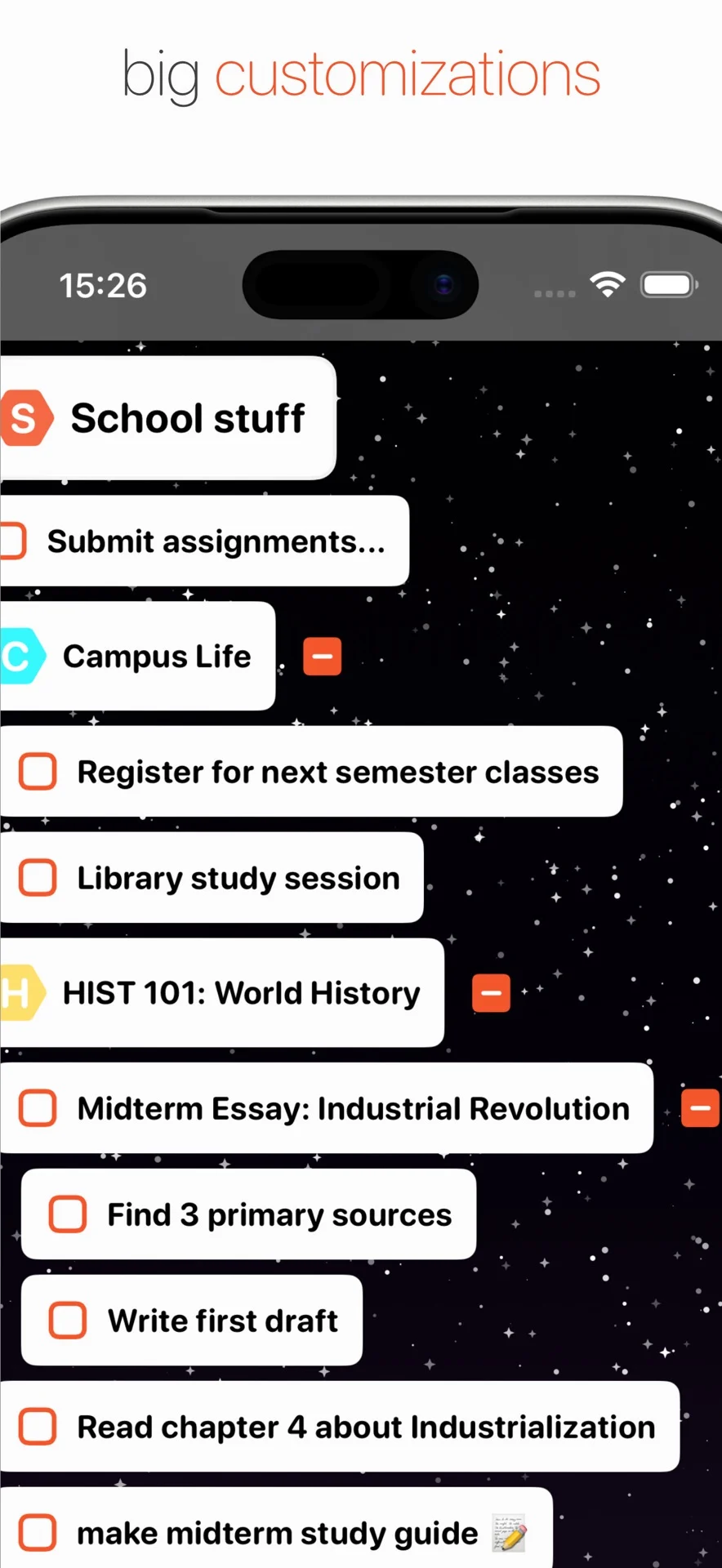
Suppose a history course has weekly reading, a midterm essay, and an exam. Keep the course in its own list, record the essay requirements in a note, divide the essay into research, draft, and revision tasks, then place the next study session on your timeline.
A practical workflow
Put the plan into motion
Create a home for each course
Use separate lists for courses, campus responsibilities, or clubs. Nested lists can hold larger units such as an essay, lab, or group presentation.
Record the important details
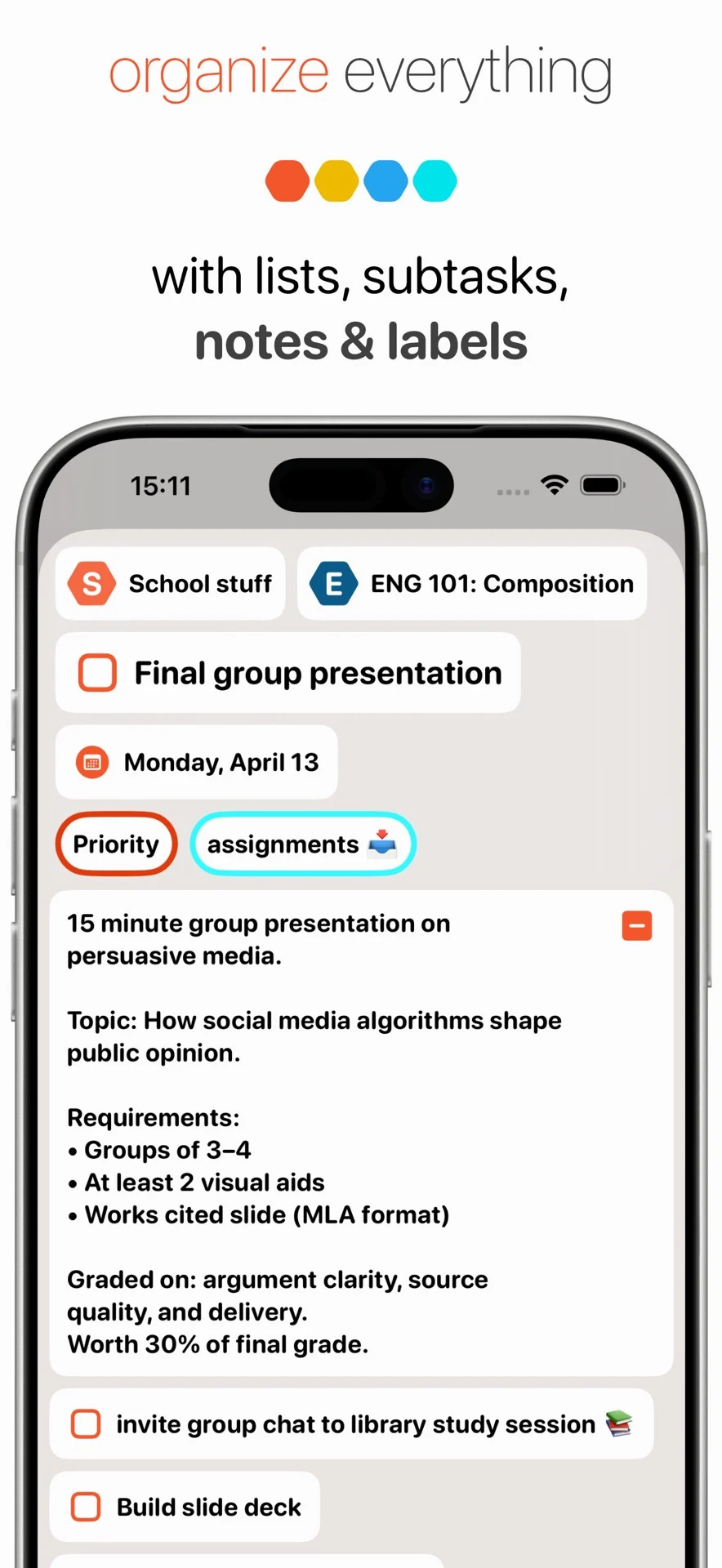
Attach notes to assignments so requirements, references, and decisions stay beside the work they explain.
Break assignments into visible steps
Turn “write the essay” into smaller actions such as choose a topic, find sources, draft, revise, and submit. Smaller tasks are easier to place into real study sessions.
Label work by context
Use labels for priorities, assignments, exams, or campus tasks. Filtering by label gives you a useful view without rebuilding your course structure.
Plan deadlines before they become urgent
Bring the next study sessions, due dates, and reminders into the timeline. Repeat recurring reading or review sessions when a steady routine helps.
Your semester plan can stay broad while your daily view stays calm. Review upcoming work regularly, then move only the next meaningful actions into focus.